
Shoulder pain treatment in Malvern for the joint and the movement around it
Rotator-cuff strain, impingement, and overhead pain that limits lifting, throwing, swimming, or serving. We treat the shoulder and the movement around it in 30–60 minute, one-on-one visits.
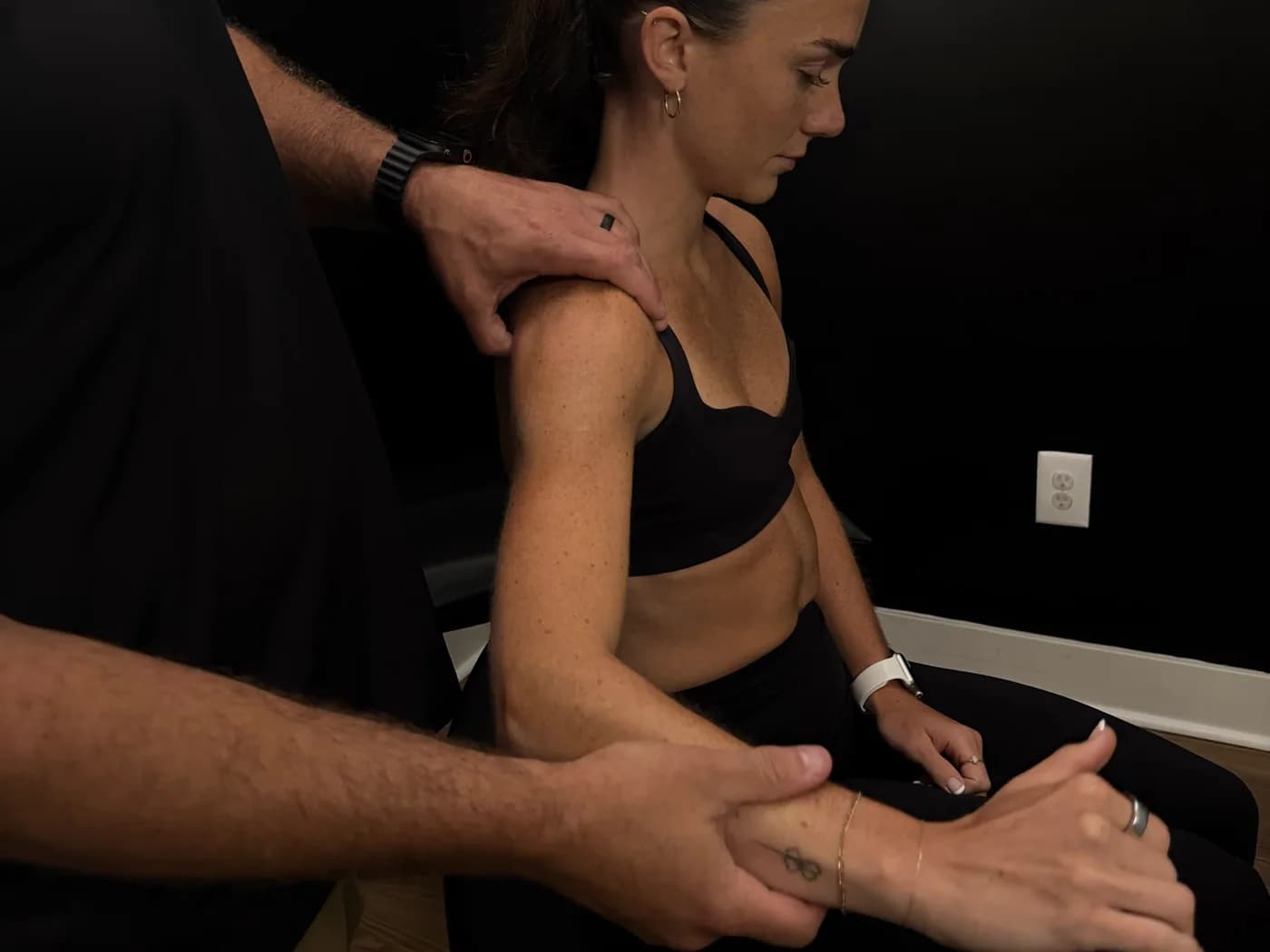
The shoulder depends on everything around it.
Overhead pain, a cranky rotator cuff, and impingement rarely come from the joint alone. The shoulder relies on the shoulder blade and upper back, and when those fall short, the cuff takes the strain.
For active adults and athletes, shoulder pain often builds from repetitive overhead work, an imbalance between pressing and pulling, or a stiff upper back that stops the shoulder blade from moving well. Resting it usually calms things down until you serve, throw, or press again.
Because we work out of network, we are not limited by insurance rules on time or technique. Every visit is 30–60 minutes, one-on-one, with the same provider, so we can combine hands-on care with physical therapy to treat the shoulder and the movement around it, then rebuild it to handle your sport.
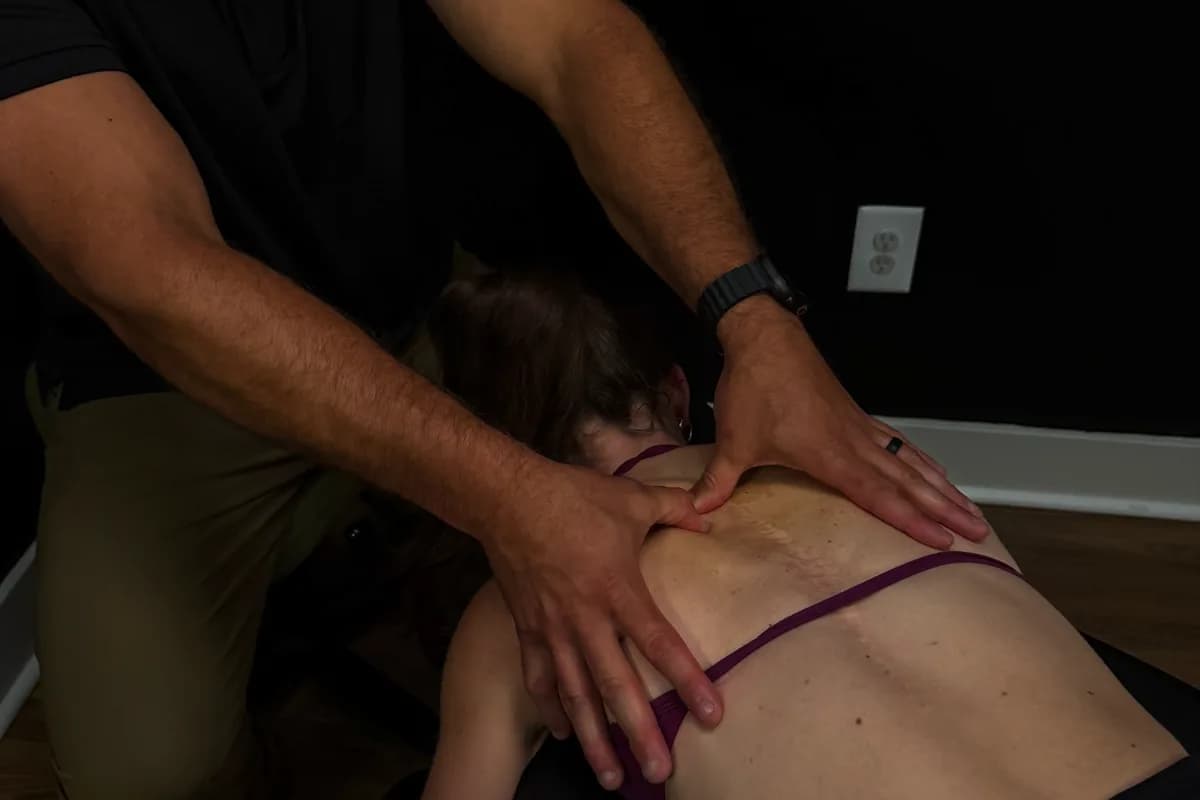
The shoulder pain we see most in active adults
From rotator-cuff strain to overhead pain that limits your sport, these are the patterns we resolve at the source.
How we get to the root cause of your shoulder pain.
Good treatment starts with an accurate diagnosis. Here is how we find the source, not just the sore spot.
Assess the whole shoulder
Your first visit is 30–60 minutes with one provider who takes your history and goals, then screens the shoulder, shoulder blade, and upper back and watches how you load overhead.
Diagnose the driver
We identify what is straining the cuff, whether that is limited upper-back mobility, poor shoulder-blade control, or a pressing-to-pulling imbalance, and explain it in plain language.
Treat hands-on
In most cases we start care the same day, using manual therapy and dry needling to calm the irritated tissue and restore comfortable overhead movement.
Load and progress
We rebuild strength and control through the cuff and shoulder blade with progressive loading so your shoulder handles pressing, throwing, or serving again.
Seven ways to fix shoulder pain.
Rotator cuff, impingement, overhead limits — what is really going on and how to fix it for good.
- 70%lifetime prevalence
- 7levers you control
- 1:1doctor-led care
Q&A about shoulder pain
Overhead is where the rotator cuff and surrounding structures are under the most demand and the least room. When the shoulder blade or upper back is not moving well, the cuff can get pinched or overloaded at the top of the range, which is exactly what our assessment is designed to find.
Many shoulder complaints are strain, irritation, or impingement rather than a tear, but only an assessment can tell. We take a thorough history and run a hands-on and orthopedic exam, and if your findings suggest imaging or a specialist is warranted, we will tell you plainly and help you take the next step.
Usually, yes, with adjustments. We keep you active where it is safe and modify overhead volume or load where it is not, so you protect your training while the underlying cause resolves.
More than the shoulder. Because our clinicians work at the top of their scope, your care can combine manual therapy, dry needling, and progressive strength work for the cuff, shoulder blade, and upper back, matched to what your shoulder actually needs.
We are fee-for-service and out of network, with simple time-based pricing, and our clinical care is HSA/FSA-eligible so you can use pre-tax dollars. See pricing and membership for the full breakdown.
Still have questions? Let's talk!
The fastest way to get a clear answer is to talk to us. Request an appointment online and our team will follow up to help you plan your first visit. Prefer to send your question in writing? Contact us and we will get back to you.
Join the waitlist
Join the waitlist to receive updates about our launch date and exclusive promotions reserved for our earliest supporters.
We route every message to the right doctor or pathway, and reply within one business day.